Managing Multiple Students With Different Goals at the Same Time
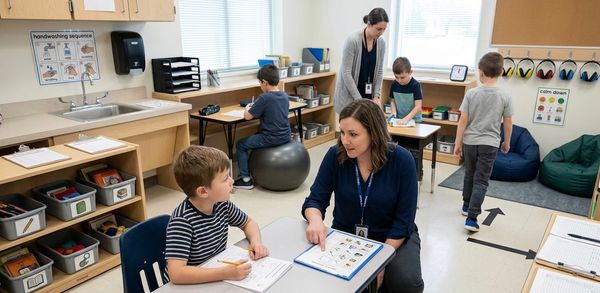
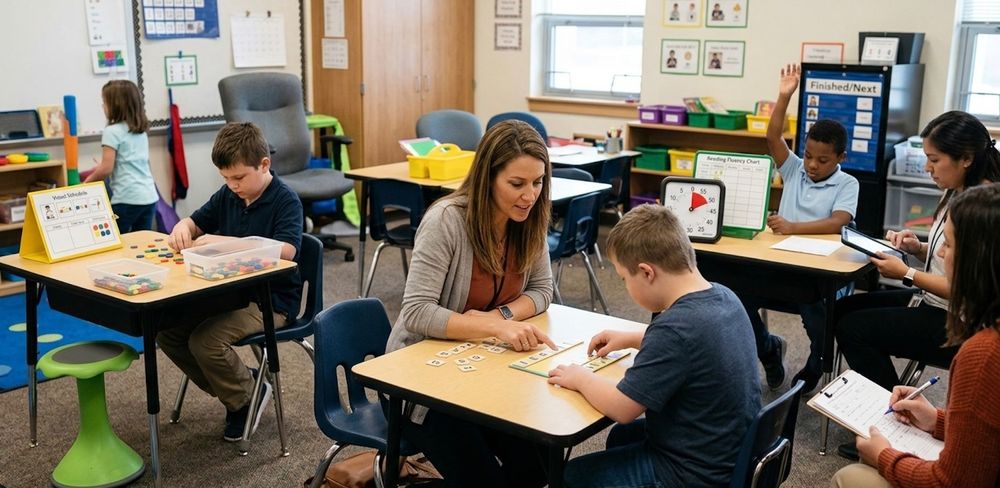
Having teaching blocks with multiple students and multiple goals can feel like controlled traffic management.
After all, what do you do when every student needs something valid, but not all of it can happen at once? Some believe the key is multitasking. But this is also about constant prioritisation under pressure.
If mixed-goal blocks have been feeling hard to hold together, this blog is for you. Keep reading to find out how you can approach this challenge more sustainably and thoughtfully.
Stop grouping by subject alone. Group by attention demand.
Grouping by content area is super-common. Reading here, math there, writing somewhere else. Looks like a solid plan.
However, two reading goals can require different levels of your attention. This is why sorting each goal into one of the categories below can help.
1. Continuous attention: Goals in this section are expensive in adult attention. They often need proper prompting, coregulation, immediate corrective feedback and ample behavioural supports during sessions. Unless you’ve sufficient support staff available, avoid stacking these goals together.
2. Intermittent attention: These goals need to be circled back to at predictable times. They can continue for short durations independently, but quality begins to drop when check-ins arrive a bit too late.
3. Delayed attention: You can comfortably launch these goals and review them later. Independent work systems, routine-based practices or visual task strips can be grouped under this category.
Build the block around those who cannot wait
Certain students can tolerate delay. Design your instruction around those who can’t.
To do this:
1. Get the independent group started before the intensive support begins. Launch the students who can sustain momentum well. Provide them with a short model, all necessary materials, and a visible success criteria to get them started. Make sure you specify a clear endpoint for them. An open-ended “keep working” can lead to uncertainty.
This sort of front-loading helps in creating sufficient room for students who’ll need active teaching later.
2. Design transitions carefully. Most of the instructional loss happens between tasks. Between shifting tasks and not knowing what to do next, students often feel overwhelmed or dysregulated.
In such cases, it’s important to follow a fixed reset routine. Offer visual “finished-next” sequences, consistent clean-up patterns and standard check-in phrases after each transition to keep students aligned. Don’t forget to make the next task visible before the current task even ends.
You must also protect re-entry. Some students can resume instantly. For those who can’t, provide entry markers. These could be sticky notes, one highlighted problem, a one-line que, or even a token on the exact spot where they’re to restart.
Balance instruction and documentation by deciding what must be captured live
Documenting everything in the moment can backfire. It doesn’t just weaken teaching. You also end up with a stack of incomplete notes that doesn’t lead you anywhere.
Instead of looking up ways to collect all data live, focus on what tends to disappear most quickly. That’s the only information you must aim to capture right away. Key details that need to be documented within the session include:
- The number of correct/incorrect responses
- The level of prompting that the student requires
- Accommodations used to enhance access (If there’s a change in support materials, document that too)
Everything else can wait until the instruction ends.
This is where many special educators lose unnecessary energy. Data that doesn’t inform instruction in real-time only serves to crowd clipboards later. That is also why many educators move away from scattered notes and memory-based backfilling. Instead, they rely on systems like AbleSpace during mixed-goal blocks. When goal data, prompt levels, accommodations, service-time tracking, and student progress histories sit inside one platform, it becomes easier to capture the essentials quickly and return later to complete the fuller documentation.
Plan for uneven progress inside the same session
Not all students progress evenly. When one student moves faster and surprises everyone, another may still need time to regulate themselves before getting started.
- If a student finishes their task earlier than expected, make sure there’s no unstructured waiting time. Have extension tasks ready. Such tasks can help deepen the same skill without needing a full reteach.
- If a student lags behind or needs longer to enter the task, do not force the original plan at its full intensity. Shorten the demand and preserve the target instead.
For example, let’s assume the original plan was for a student to wrap up 10 written subtraction problems independently. If they’re having trouble settling down, start with 2 problems done together. You can then ask the student to complete 2 more with a visual model or verbal cue. The target still remains subtraction, but the entry point becomes smaller. - If one student’s regulation needs are interrupting the whole block, ditch your idea of perfect pacing. Focus on restabilising the room. Remember, an emotionally safe block will still be considered productive, even if the number of trials captured is less than you expected.
Conclusion
The strongest practitioners don’t multitask. They just sequence their attention with better precision.
Mixed-goal blocks might never feel effortless. But when you know which students can’t wait, things become more workable. Attention, when allocated well, can change instruction and pave the way for cleaner data.